
Job Overview
Location: Richmond Hill, Ontario
Structure: Detached three-storey house with finished room in the roof
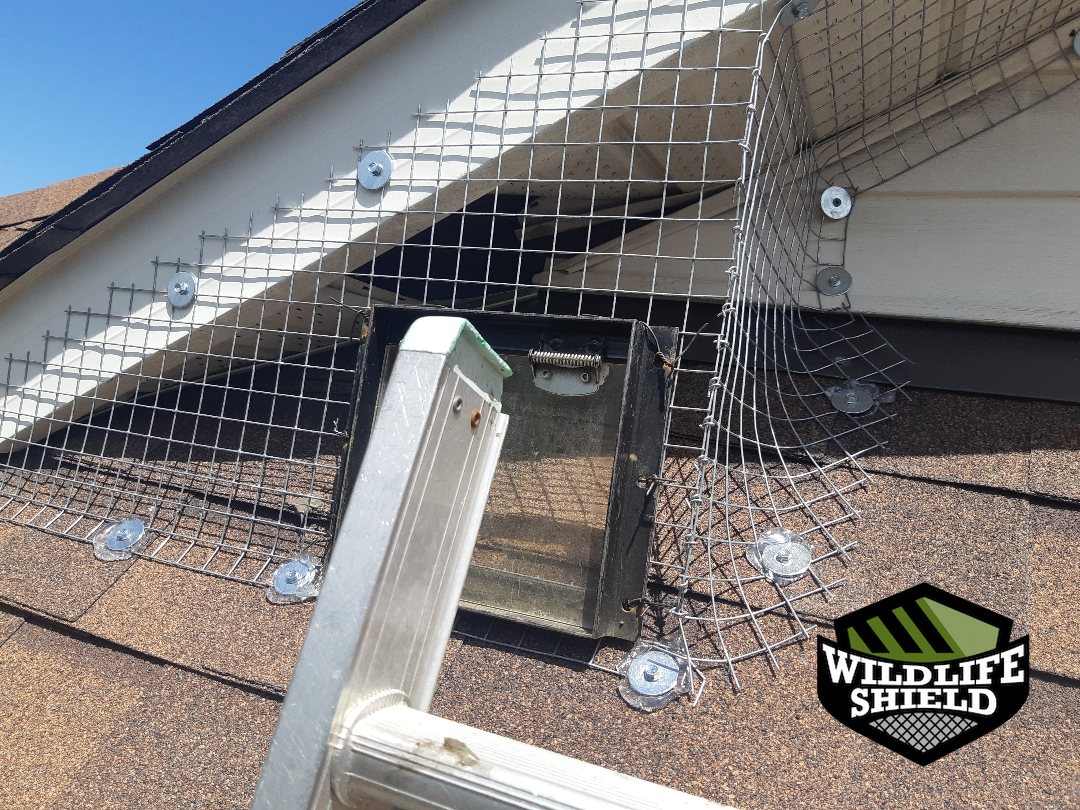
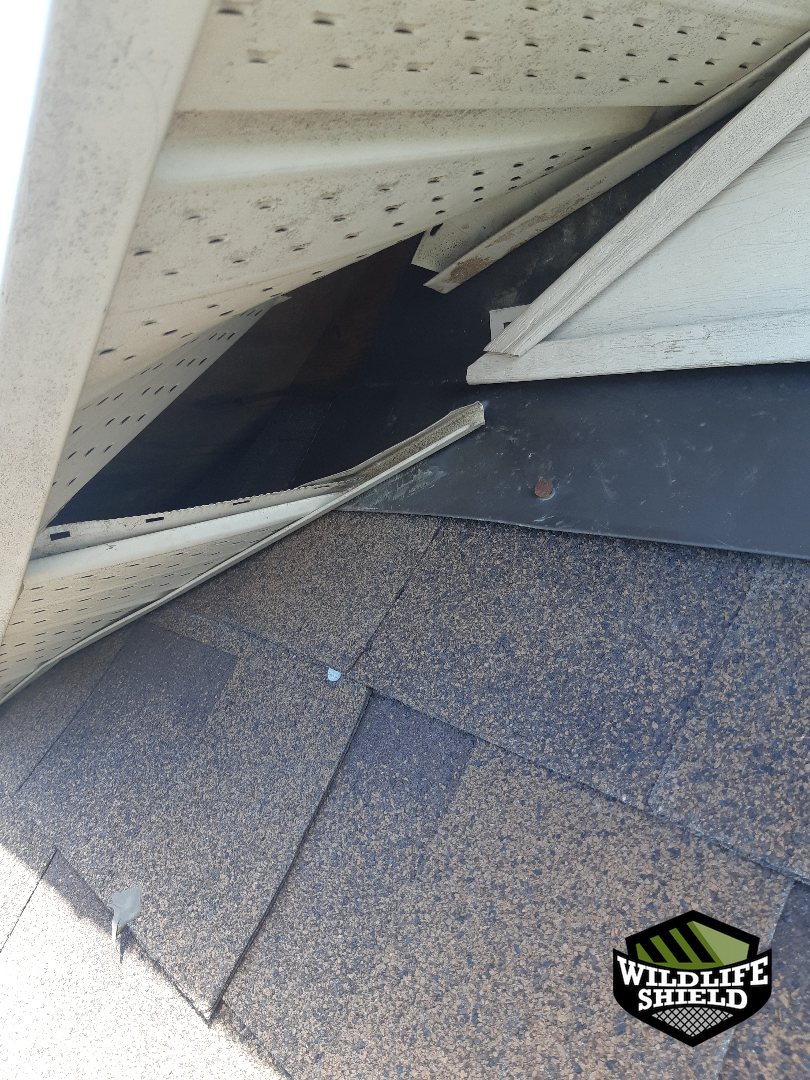
Problem: Raccoon activity in the attic with access through a third-storey soffit
Service: Raccoon removal and full roofline exclusion
Visits: 3
Summary
Our team completed a three-visit raccoon removal and exclusion service at a multi-storey residential property in Richmond Hill. The work focused on safely confirming the absence of dependent young, installing a one-way door at the active entry point, and reinforcing vulnerable roof and vent areas with galvanized steel exclusion materials. No further wildlife activity was reported following completion.
Background / Property Context
The property is a detached, three-storey home with a room built into the roof structure. The height and roof design created multiple elevated access points, including soffit intersections and roof vents, which required working-at-heights precautions and multi-technician access for certain areas.
Customer Concern
The homeowner reported hearing raccoon activity in the attic and identified a suspected entry point at the right-hand soffit on the third storey. The timing coincided with the end of raccoon baby season, raising concern about the possible presence of dependent young in the attic space.
Inspection & Findings
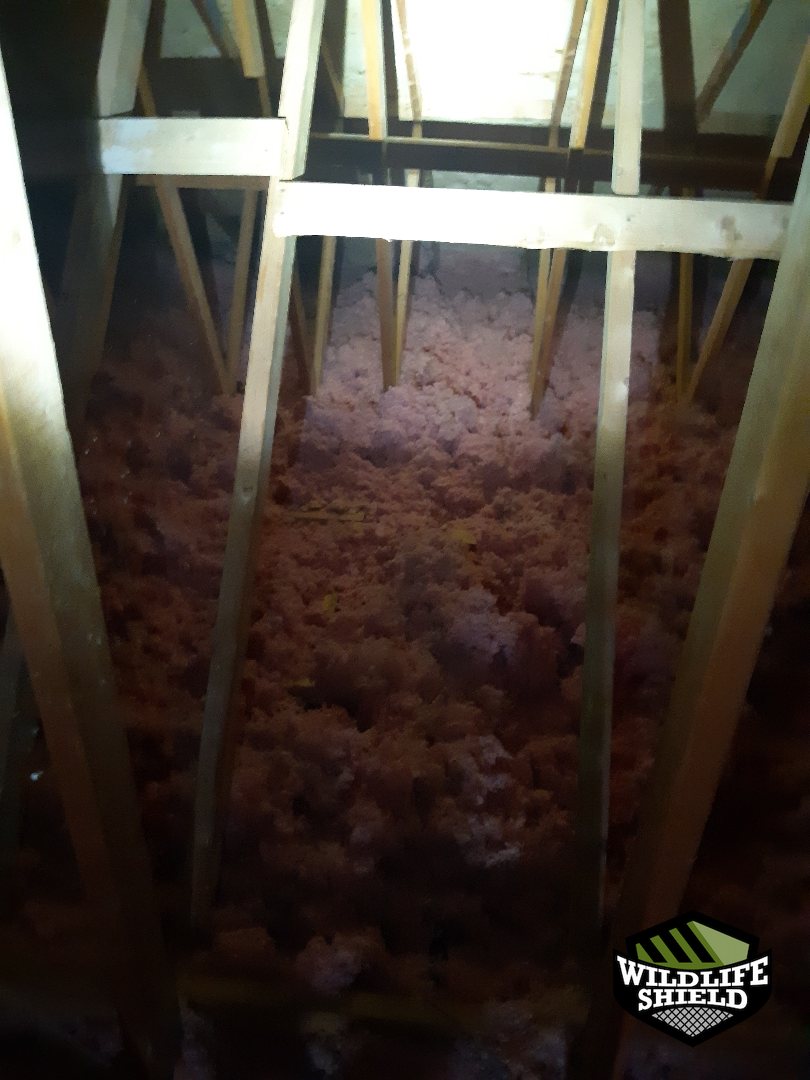
During the initial inspection, the attic was accessed and examined for signs of raccoon nesting or dependent young. No babies were observed. Disturbed attic insulation was visible, consistent with wildlife movement. Exterior inspection identified a soffit gap at a roofline intersection that could not be safely accessed by a single technician at that time.
Additional vulnerabilities were noted along the roofline, including uncovered roof vents and a wall vent opening. Evidence of mouse activity was also observed in the attic; however, no rodent treatment was performed during this service.
Cause Analysis
Raccoons are strong climbers and frequently target soffit intersections and roof transitions on taller homes, particularly where gaps or construction seams are present. Elevated rooflines and multiple vent penetrations increase the number of potential entry points. Once an access point is established, repeated use can widen gaps and lead to attic entry.
Treatment / Removal
After confirming the attic was free of dependent young, a humane, non-lethal raccoon removal plan was implemented. On the second visit, with two technicians on site for safety, a raccoon one-way door was installed directly over the identified soffit entry point. This allowed the animal to exit the attic without the ability to re-enter.
Exclusion & Repairs
Exclusion work was completed in stages across the visits and included:
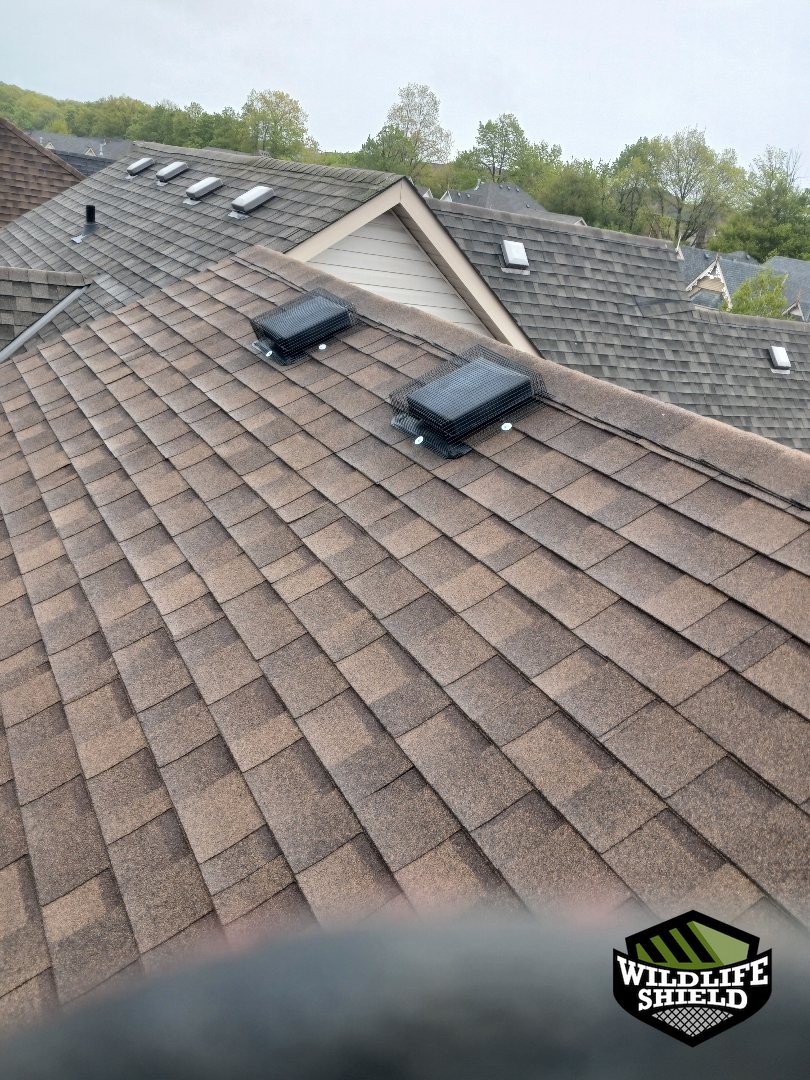
- Installation of eight roof vent covers fabricated from galvanized steel
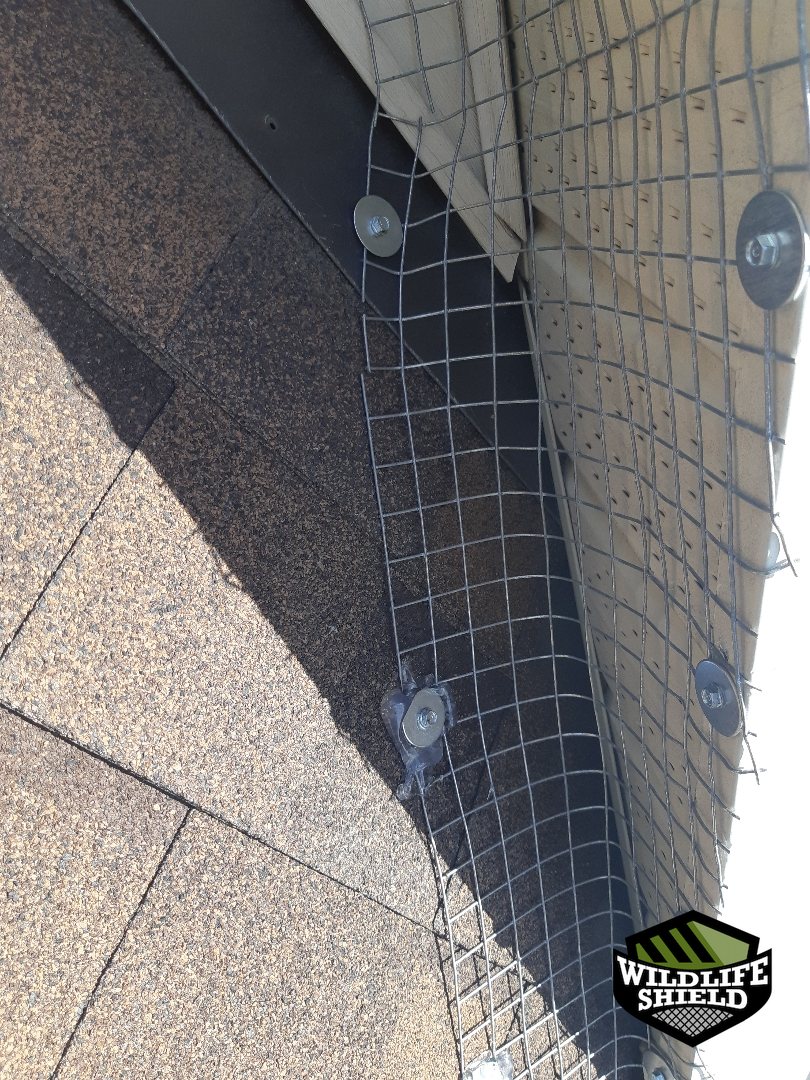
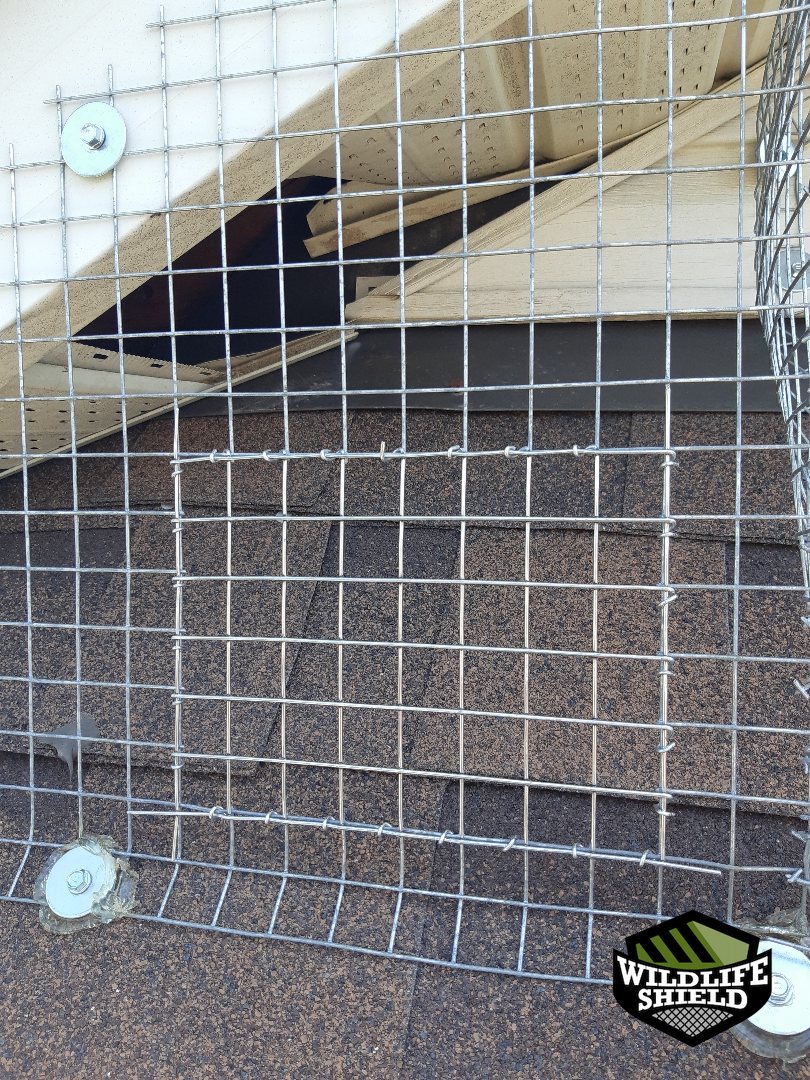
- Sealing of the soffit roof intersection using galvanized steel mesh
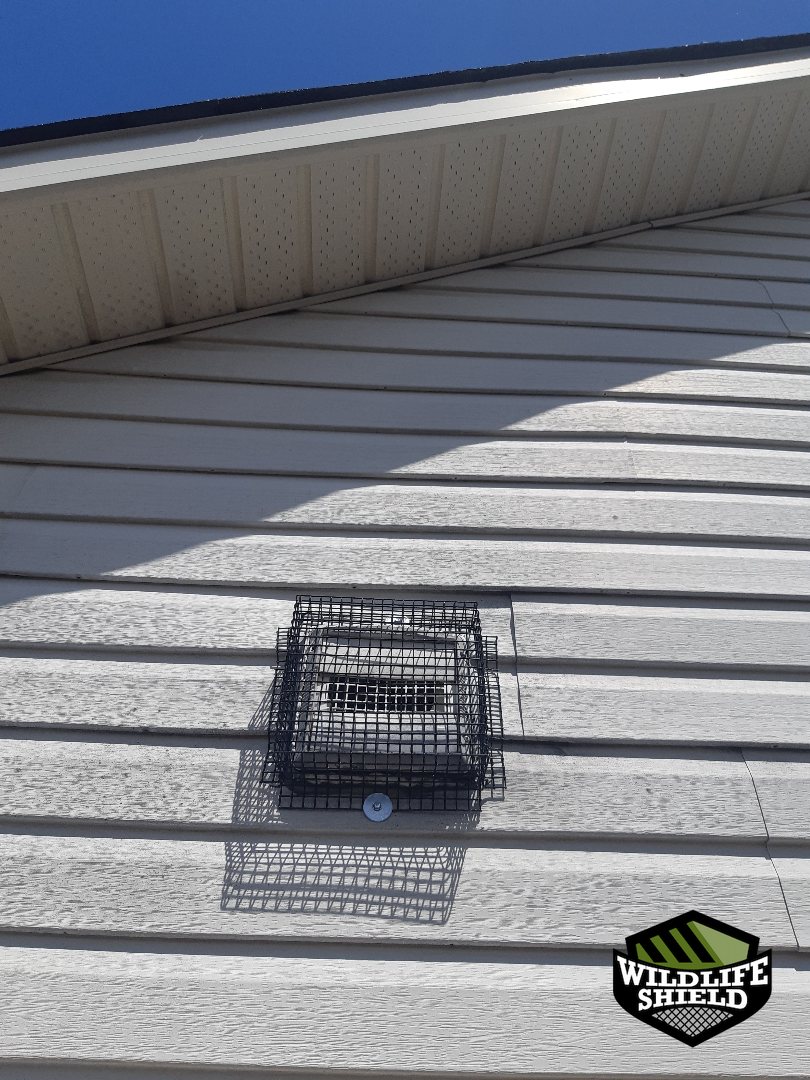
- Installation of one wall vent cover made from galvanized steel
- Reinforcement of roofline gaps adjacent to the one-way door
All materials were mechanically fastened and contoured to the structure to prevent future wildlife access.
Outcome & Confirmation
On the final visit, the homeowner confirmed that no further noises or activity had been heard in the attic. The one-way door was removed, and the exclusion work was inspected to ensure all entry points were fully sealed. No additional wildlife activity has been reported since completion.
Technician Notes
The initial inspection confirmed that safe access to the third-storey soffit required multiple technicians. Attic inspections were repeated to ensure no raccoon young were present before exclusion. Technician Ardian completed the primary exclusion and one-way door installation with support from the team. All work was performed humanely and in accordance with Ontario wildlife removal standards.
This service was completed by our Richmond Hill wildlife team. For wildlife removal inquiries in Richmond Hill, contact289-814-2496.